Websites · 5 min read · November 2026
How much does a website cost in Luxembourg?
It depends on five things you can decide before asking for a quote. Knowing them is the fastest way to get comparable offers.
 Edmond JreigeANEDA
The short answer
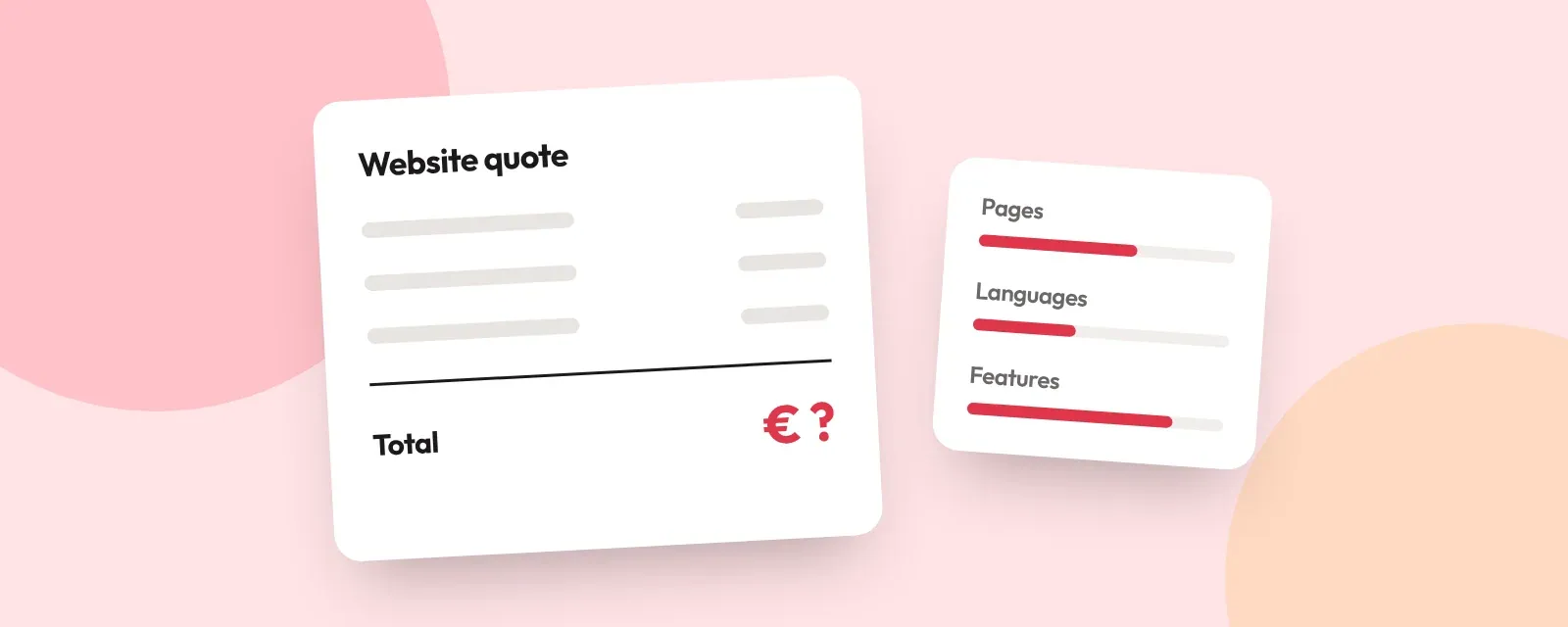
It depends on five things you can decide before asking for a quote: the number of page types, the languages, who provides the content, the features and the depth of design. Settle them on one page, send that page to every agency, and the offers become comparable.
Why do quotes vary so much?
Ask three agencies for a website and you may get three very different prices. They are rarely quoting the same thing:
- One has priced a template with your logo.
- Another a custom design, with copywriting and photography.
- A third a site connected to your CRM, with a client area.
All three are "a website". The price follows the scope, not the agency name. The way to compare is to fix the scope yourself.
What are the five things that set the price?
1. The number of page types
Count templates, not pages. Twenty service pages that share one layout cost far less than ten pages that are all different. A typical company site has a home page, a service page, a project page, an article page, an about page and a contact page.
2. The languages
In Luxembourg, two or three languages are normal. Each one adds translation, checks, its own addresses for search engines and its own maintenance. Decide early which pages exist in which language: not every page needs every language.
3. The content
Who writes the texts and provides the images? This is the part most often left out of a quote, and the one that delays launches. Writing in-house is cheaper on paper, but plan the time it takes your team.
4. The features
A contact form is simple. A booking system, a shop, a client area, a job board or a connection to your tools is a project inside the project. List what the site must do, not only what it must say.
5. The depth of design
Adapting a template is fast. A custom design with research, several rounds and tests with users takes longer and costs more. Both are valid: the question is how much the site has to set you apart.
How do the choices add up?
The same company can end up with very different projects depending on these five answers:
| Choice | Lighter | Heavier |
|---|---|---|
| Page types | A handful of shared layouts | Many unique layouts |
| Languages | One language | Three languages, every page |
| Content | Your team provides it | Written and photographed for you |
| Features | Contact form | Shop, booking or client area |
| Design | Adapted template | Custom design, tested with users |
Moving one line from left to right is often a better decision than cutting everything to the minimum. Spend where the site earns you clients.
What should a quote always include?
- What is delivered, page type by page type.
- Who provides the content, and by when.
- How many rounds of changes are included.
- What happens after launch: hosting, maintenance and licences, per year.
- Who owns the design, the code and the accounts.
- The timeline, with what the agency needs from you at each step.
A quote without these is not cheaper. It moves the cost to later, as extras.
What does a website cost after launch?
A website is not paid once. Count, for each year:
- Hosting and domain names.
- Platform or plugin licences, if any.
- Security and software updates.
- Small changes and new pages.
A site that nobody maintains slowly breaks: forms stop sending, plugins conflict, pages get slower. It becomes expensive the day it has to be rebuilt.
How do you get comparable offers?
Write one page before you call anyone. It should cover:
- The goal of the site, in one sentence.
- The page types you need.
- The languages, and which pages exist in each.
- The features.
- Who writes the content and provides the images.
- Your deadline, and what fixes it.
Send the same page to each agency. The answers will finally be about the same project, and the differences in price will show differences in approach, which is what you actually need to compare.
Where can you save without regret?
- Fewer page types. Most sites need fewer layouts than they think.
- A phased launch. Go live with the pages that sell, add the rest after.
- Content ready on time. Delays on your side are the most common hidden cost.
Where not to save: the structure, the speed on a phone and the redirects from your old site. Those decide whether the new site brings in more than the old one.
Template or custom design?
A template is a good choice when the site mostly needs to exist, look professional and be easy to update. A custom design is worth it when the site has to set you apart, explain a complex offer, or bring in clients against strong competitors.
Many projects sit in between: a custom design for the pages that sell, and simple shared layouts for the rest.
Which questions should you ask each agency?
- Who will actually work on the project, and have they done a similar one?
- Which platform do you suggest, and why for us?
- What do you need from us, and when?
- What happens if the project takes longer than planned?
- Can we update the site ourselves after launch?
- Which sites have you built that are still online, and can we talk to the client?
The answers tell you as much as the price does.
Want a quote on that basis? Book a call: you get the scope, the price and the timeline in writing. See also website design and ways to work.